

Breast Implant Removal West Palm Beach & Jupiter
Breast implant removal, also known as explant surgery, is a normal part of having breast implants. Though modern silicone implants can last up to 20 years, they eventually need to be removed or exchanged. Breast implant removal surgery may involve removing the implant alone or the implant together with its surrounding scar capsules.
For some women, however, the decision to undergo explant surgery is motivated by a desire to live without breast implants. This deeply personal choice may stem from lifestyle changes, evolving aesthetic preferences, or health concerns. Some women choose to remove breast implants after years of living with them, while others want to replace them with new breast implants.
If you’re ready to have your breast implants removed, South Florida plastic surgeon Dr. Jason Cooper can help you achieve your medical and cosmetic goals. Known throughout the Jupiter and Palm Beach Gardens area for his patient-centered approach, Dr. Cooper’s practice is founded on the values of compassion, focus, and expertise. To discuss your options for breast implant removal, contact us by phone at (561) 406-6574.
Quick Links
- Why Some Women Choose to Remove Their Breast Implants
- Your South Florida Breast Implant Removal Consultation
- What Happens During Your Breast Implant Removal Consultation?
- Am I A Good Candidate For Breast Implant Removal?
- How Is Explant Surgery Performed At Our Clinic In Jupiter?
- What To Expect After Having Explant Surgery?
Why Some Women Choose to Remove Their Breast Implants
Many women undergo explant surgery for purely cosmetic reasons. You may wish to return to your natural breast size and eliminate the maintenance associated with implants or switch implant materials – from saline to silicone or vice versa. Women who had breast augmentation years ago may also find that their breast size or breast shape no longer matches their goals.
Sometimes, implant removal is medically necessary, such as with capsular contracture, which occurs when the “capsule” of scar tissue surrounding the implant becomes tight or firm, causing discomfort or distortion. Other concerns may include implant rupture, shifting, rippling, or chronic irritation. A tight scar capsule can distort the implant and the surrounding breast tissue, and a ruptured breast implant can also affect the shape of the breast.
During your consultation, Dr. Cooper will evaluate your anatomy and the condition of your implants and surrounding tissue to recommend whether a simple implant removal, partial capsulectomy, or full capsulectomy is the best path for your anatomy and goals. He may also use imaging, such as ultrasound or magnetic resonance imaging, to evaluate your implants if a breast implant rupture is suspected.
Dr. Cooper knows how individual this decision is. His responsibility is to explain what results are realistically achievable and give you the information you need to make responsible decisions about your health and well-being.
Your South Florida Breast Implant Removal Consultation
As a board-certified plastic surgeon specializing in breast procedures, Dr. Jason Cooper has the skill and experience needed to beautifully reconstruct your natural breasts. After graduating from the Harvard Plastic Surgery Residency Program, one of the most prestigious programs in the country, he has been regularly recognized as a “Top Doctor.”
To learn more about his credentials or to arrange a personal consultation, contact our clinic in Jupiter, South Florida. We look forward to caring for you in our fully integrated, AAAASF-certified facility as you begin a new chapter in your life.
About the Breast Implant Removal Procedure
Explant surgery typically involves multiple steps and is tailored precisely to each patient’s needs. During your consultation, Dr. Cooper will perform a thorough examination and take photographs of the treatment area. Together, you will discuss incision placement, surgical details, and the aesthetic options following implant removal that will best flatter your figure. For example, Dr. Cooper may recommend combining your explant surgery with a breast lift if you are worried that excess stretched skin will make your breasts look deflated. Because breast implant surgery and breast implant removal surgery both involve the breast pocket, your plan may also address the surrounding scar capsules and breast tissue.
A lift can provide immediate reshaping by improving your breasts’ shape and projection, resizing enlarged areolas, and moving your nipples to a more youthful position. Dr. Cooper will help you determine whether a lift is necessary or whether your tissue is likely to rebound naturally over time. Some women choose a breast lift because their natural breast tissue has stretched over time, while others prefer implant removal alone.
Am I a Good Candidate for Breast Implant Removal?
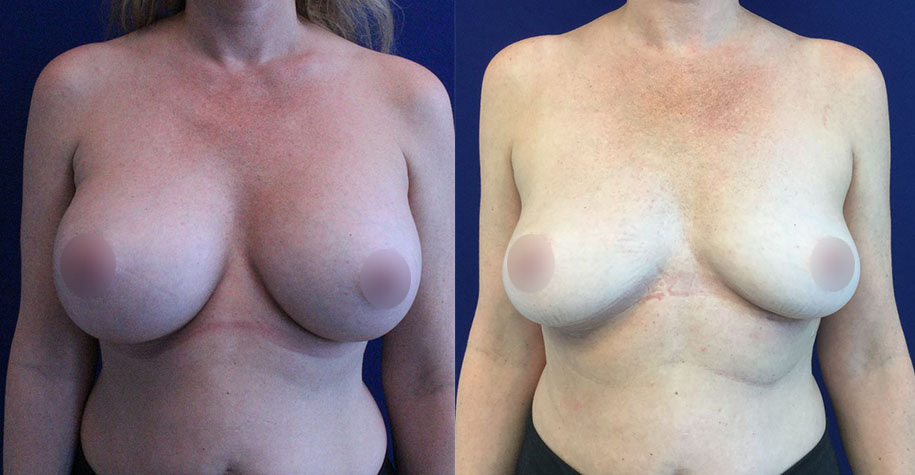
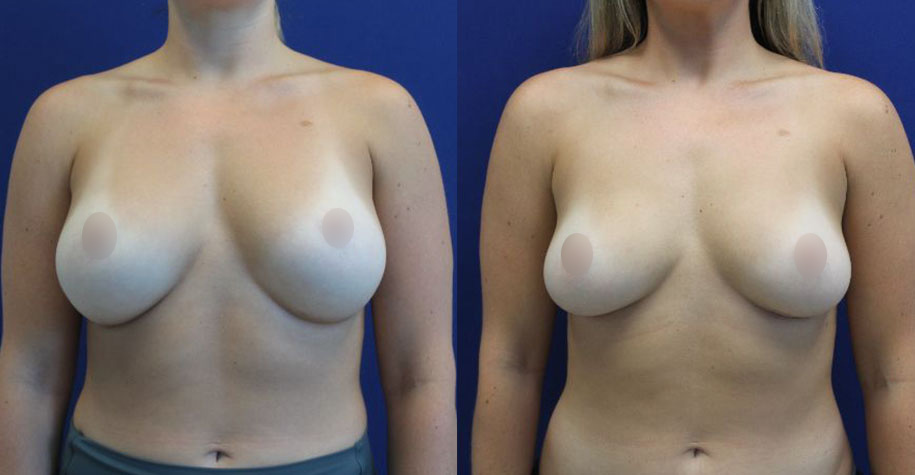
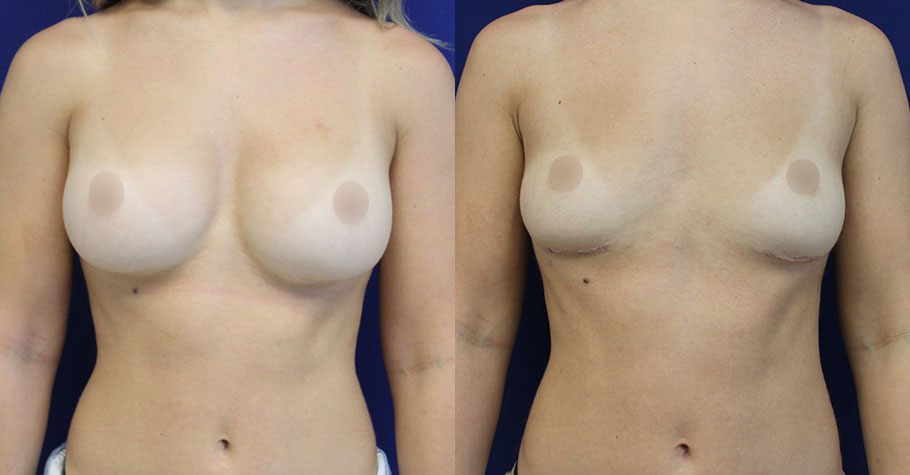
The ideal explant candidate is a woman who is in good overall health, with realistic expectations and clear goals for her procedure. Before having your breast implants removed, you should review “before-and-after” photos of successful combined explant and breast lift surgeries and think carefully about the aesthetic objectives you want to achieve. We also encourage our patients to bring pictures showing the breast shape they would like to have after breast implant removal and recovery is complete. Candidates should also discuss any history of breast cancer because it can affect planning and the breast imaging that may be needed afterward.
Breast implant removal might be right for you if:
- Your breast implants are leaking. (Note that ruptured implants must be removed as soon as possible for medical reasons.)
- You’ve experienced complications after having breast augmentation, such as capsular contracture, infection, or prolonged localized irritation.
- You have health concerns that make implant removal necessary, e.g., BIA-ALCL or breast cancer.
- The weight of your implants is causing you discomfort.
- You would prefer to return to your original breast size.
- Your implants have shifted, and you don’t like the way they look.
Before having your breast implants removed, you may need to make minor lifestyle changes to minimize your risk of complications. If you smoke, you will need to stop smoking for at least three weeks before and after surgery. You may also be asked to temporarily stop taking certain medications, such as blood thinners, with your doctor’s permission.
How Is Explant Surgery Performed at Our Clinic in Jupiter?
Capsulectomy
If you haven’t experienced any complications with breast implants, Dr. Cooper will make an incision below each breast and carefully remove your implants. If the capsules of scar tissue around your implants are unusually thick or rigid (a condition known as capsular contracture), Dr. Cooper will perform an additional step called a “capsulectomy.” During a capsulectomy, internal scar tissue is removed from the breasts to improve aesthetic outcomes. In a partial capsulectomy, part of the scar capsules is removed, while a total capsulectomy removes the entire fibrous capsule around each implant.
Keep in mind that the accumulation of this tissue is an expected, normal consequence after the implantation of any medical device. Pacemakers, stents, and joint replacements all become “encapsulated” without any detrimental effect on the patient. Breast implants are a type of breast prosthesis, and the scar capsules that form around any breast prosthesis are a normal response.
En Bloc Breast Implant Removal
To restore round, youthful breast contours, Dr. Cooper may recommend following breast implant removal with a breast lift (mastopexy). A breast lift removes excess skin from the breasts and reshapes the areolae, as needed, to prevent sagging and ensure a flattering figure. This procedure can be performed at the same time your implants are removed, so you won’t need multiple operations. Dr. Cooper will make additional incisions along the front of each breast and around each areola, remove stretched skin, and then carefully adjust the remaining breast tissue to match the cosmetic goals you discussed during your consultation. En bloc breast implant removal takes out the implant and the entire scar capsule together in one piece, which may be recommended when there is a rupture, capsular contracture, or concern about breast implant associated anaplastic large cell lymphoma (BIA-ALCL).
Breast implant removal takes one to three hours to complete, depending on the complexity of the procedure. You will be able to go home the same day as your surgery.
What to Expect After Having Explant Surgery
Before the procedure
Before your operation, you will need to arrange for someone to drive you home from our in-office surgery center and care for you while you rest. You will be provided with supportive garments and pain medication to ensure your comfort during recovery. In some cases, the doctor uses surgical drains to reduce inflammation and support healing. These short, flexible tubes are easy to care for and will be removed once the fluid stops draining.
After the procedure
Most women who have their breast implants removed can return to work after one week, though en bloc breast implant removal patients may need to rest slightly longer. All explant patients must wait at least four weeks before resuming vigorous exercise or lifting heavy objects.
Though the initial recovery period following explant surgery is brief, your breasts will need time to adjust to their new shape. Once your bandages are removed, your breasts may look flat or slightly concave. This appearance is normal and temporary. Your breasts will slowly fill out over a period of three to six months as the tissue that was compressed by your implants expands into the breast pocket. Because your breast tissue and chest muscles have been stretched or compressed by implants, your breast shape may change gradually as they relax.
You may feel a mix of emotions after explant surgery, including relief, excitement, and sometimes uncertainty. Dr. Cooper encourages you to give yourself time to heal physically and mentally. His empathetic, patient-centered approach will help you feel heard, understood, and confident as you recover.
Types of Breast Implants You May Want to Remove
Most breast implants have a silicone shell and are filled with either silicone gel or sterile saline. Silicone gel breast implants, also called silicone filled breast implants, use a cohesive silicone gel that holds its shape, and gummy bear breast implants are a firmer form of silicone gel filled implant. Saline breast implants, also called saline filled breast implants or saline filled implants, arrive with an empty shell that is filled with sterile salt water during surgery. When a saline implant ruptures, the implant typically deflates, so the change is usually noticeable.
Breast implants also differ in surface texture. Smooth implants have a slick shell, and smooth surfaced implants may move more freely within the breast pocket, while textured breast implants and other textured implants have a rougher surface designed to help the implant stay in position. Some saline filled implants are structured implants with internal shells that are designed to give a more natural feel.
Every breast implant is a type of breast prosthesis, and no breast implant lasts forever. Whether your breast augmentation used silicone breast implants or saline breast implants, you may eventually need breast implant removal surgery, implant removal with replacement, or a new implant.
Breast Implant Rupture and Follow-Up Imaging
A breast implant rupture can happen when the shell weakens or tears. A saline implant that ruptures deflates quickly, while a silicone breast implant rupture may cause no obvious symptoms, so some women do not realize that a rupture has occurred. Because asymptomatic patients can still have a silent rupture, periodic imaging, such as ultrasound or magnetic resonance imaging, is often recommended for women with silicone gel filled implants.
Whenever a ruptured breast implant is suspected, Dr. Cooper can discuss whether surgical removal, with or without a new breast implant, is the best option. In many cases, removing the damaged implant, the surrounding scar capsules, and any scar tissue may help address the problem and reduce the chance of more surgery later. Any breast implant procedure carries some risk, so your surgeon will explain what to expect.
Breast Implant Associated Anaplastic Large Cell Lymphoma (BIA-ALCL)
Breast implant associated anaplastic large cell lymphoma (BIA-ALCL) is a rare type of lymphoma, a cancer of the immune system, which has been linked to textured breast implants. Anaplastic large cell lymphoma most often appears as fluid or swelling around the implant, and it is typically found years after surgery. Because BIA-ALCL has been associated with textured implants, some patients choose to remove breast implants with a textured surface as a precaution.
If breast implant associated anaplastic large cell lymphoma is confirmed, treatment often includes en bloc removal of the implant and the entire scar capsule, and some patients may need additional care from a specialist. Dr. Cooper can discuss breast implant associated ALCL, your individual patient risk, and whether breast implant removal is appropriate for you.
Rare cases of squamous cell carcinoma and other lymphomas have also been reported in the scar capsules around breast implants, although these cases are uncommon. Anyone who notices sudden swelling, pain, or a lump near a breast implant should contact our office promptly.
Breast Implant Illness and Systemic Symptoms
Some patients receiving breast implants report systemic symptoms, such as joint pain, muscle aches, chronic fatigue, and brain fog, that they believe are related to their implants. Breast implant illness is not a formal medical diagnosis, and researchers continue to study whether breast implants play a role.
Current research has not established that breast implants cause connective tissue diseases, such as rheumatoid arthritis, or other autoimmune disease, and there is insufficient evidence to say that implants cause a systemic disease in most women. Still, every patient is different, and individual patient risk can vary with medical history. Symptoms can also affect mental health, so Dr. Cooper encourages open conversations about how you feel physically and emotionally before and after breast implant removal.
Jason Cooper, MD
Board-Certified Plastic Surgeon
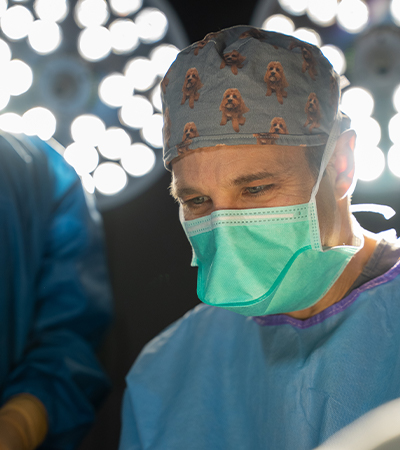
Trust your results to Dr. Jason Cooper, a board-certified plastic surgeon with nearly 20 years of experience and a top 1% facelift and neck lift practice in the U.S. Known for his natural aesthetic and meticulous approach, he delivers safe, personalized results using the latest advanced techniques.





Learn More About Breast Implant Removal
If you are considering breast implant removal and are in the process of deciding if it is the best option for you, we recommend that you get professional advice. Dr. Cooper invites you to our stress-free office environment to get the information you need to make a wise decision.
Contact our cosmetic plastic surgery office by calling (561) 406-6574 or scheduling a consultation. We have locations in Jupiter and Palm Beach, FL, and proudly serve patients visiting us from all over Florida and beyond.
Breast Implant Removal FAQs
Is breast implant removal a major surgery?
Removing breast implants is not necessarily a major surgery. However, depending on your implants’ size and how long you have had them, you may wish to add a breast lift to your surgical plan to address loose skin and reinforce the breast wall. Breast implant removal is a surgical procedure that may be shorter than the original breast augmentation, though the length depends on whether scar capsules are removed.
Can I replace my implants with smaller ones instead of removing them completely?
Absolutely. Some patients choose implant exchange rather than full removal. Dr. Cooper can help you compare your options to determine which aligns better with your goals. Some patients choose new breast implants, which may be silicone breast implants or saline breast implants, while others prefer to remove breast implants entirely and rely on a breast lift to refine their shape. If you choose replacement, Dr. Cooper will explain how it differs from your current breast implants.
Is it painful to have breast implants removed?
The recovery period is relatively brief. Most women feel well enough to return to work after about one week. If you had larger implants, you may also experience less neck, back, and shoulder pain after having them removed.
Do breasts go back to normal after implant removal?
After your breast implant removal, you may have some skin laxity. Fortunately, a breast lift can resolve this. Many women notice that their breasts settle into a more normal breast shape over several months, and any breast swelling or firmness from scar tissue typically improves with time.
What happens to your body after implant removal?
Prepare for breast sagging and loose skin after breast implant removal. You may also have to deal with a temporary loss of nipple sensation. As stated before, cosmetic breast enhancement procedures can resolve sagging breasts and excess skin.
Will explant surgery improve my breast implant illness symptoms?
Some women feel better after having their implants removed. Dr. Cooper will discuss your health concerns and help you make an informed decision based on current evidence. Breast implant illness is a term some patients use for symptoms such as fatigue and joint pain, although it is not a formal medical diagnosis.
How soon can I sleep on my side after implant removal?
Most patients can resume side sleeping after several weeks once discomfort decreases and healing is underway. Dr. Cooper will provide personalized guidance based on your progress.
How much does it cost to have breast implants taken out?
Your total price tag will depend on various factors, including surgical complexity. Dr. Cooper will give you an accurate quote after meeting with you and learning about your goals.
Will my health insurance cover breast implant removal?
Typically, insurers only agree to pay for explant surgery if implants cause medical complications such as rupture, capsular contracture, or infection. Dr. Cooper can explain when breast implant removal is medically necessary to help you understand whether you qualify to use your health insurance.
How do I prepare for an explant surgery?
Preparing for breast implant removal is critical for successful results. Here is a to-do list of things to accomplish:
- Schedule a consultation with a board-certified plastic surgeon.
- Adjust medications as directed.
- Contact your medical insurance to ask if they will cover some of your costs.
- Arrange to take time off work.
- Make sure you have support at home to help you during recovery.
How long do I have to wear a compression bra after explant surgery?
While Dr. Cooper will determine how long you need to wear your surgical bra after breast removal surgery, the average is two to six weeks. Unless he instructs otherwise, wear the garment 24 hours per day except when showering. Compression is critical for post-surgical care.
Why choose a board-certified plastic surgeon for implant removal?
Partnering with a board-certified plastic surgeon with ample experience in breast surgery will put you in the best possible position for an optimal outcome. Dr. Cooper is Harvard-trained, knowledgeable about a wide range of breast surgery techniques, and uses his skill to minimize risks and potential complications.
What are the different types of breast implants?
Breast implants are either silicone gel breast implants or saline breast implants, and they may have a smooth or textured surface. Many women find that silicone implants feel closer to natural breast tissue, while saline filled breast implants are filled with sterile saline solution during surgery. A silicone gel filled implant contains cohesive gel, while a saline filled implant uses sterile saline solution. Dr. Cooper can identify the type of breast implants you have during your consultation.
Do I need to remove breast implants if I have no symptoms?
Breast implants are not lifetime devices, and many women need breast implant removal or replacement at some point. Silicone breast implants and saline breast implants can last for many years after breast augmentation, but the timeline varies, so regular check-ups help your surgeon monitor your breast implants and any scar tissue that forms around them.
What is en bloc breast implant removal?
En bloc breast implant removal takes out the implant together with the surrounding scar capsule and scar tissue in one piece, instead of removing the breast implants and scar capsules separately. Dr. Cooper may recommend it when there is a rupture, capsular contracture, or concern about BIA-ALCL, and, as with any breast implant procedure, the best approach depends on your anatomy and medical history.
What is a capsulectomy, and when is it needed?
A capsulectomy removes the scar capsules that form around breast implants. A partial capsulectomy removes part of the fibrous capsule, while a total capsulectomy removes the scar tissue surrounding the implant. Scar capsules are a normal response to any implant, but a tight capsule can cause capsular contracture, so Dr. Cooper will examine the scar tissue and recommend an approach for this breast implant procedure.
What is BIA-ALCL, and who is at risk?
BIA-ALCL, or breast implant associated anaplastic large cell lymphoma, is a rare lymphoma that has been linked mainly to textured breast implants. The outlook is generally better when anaplastic large cell lymphoma is found early, and your individual patient risk depends on factors such as the type of implant you have. Rare squamous cell carcinoma in the capsule has also been reported, so unusual swelling deserves evaluation. Dr. Cooper can discuss breast implant associated ALCL and whether removal is appropriate.
Can breast implants cause breast cancer?
Breast implants have not been shown to cause breast cancer, but breast implants can make breast imaging more complex, so women should continue routine breast cancer screening. Ultrasound or magnetic resonance imaging may be used to evaluate breast implants, and you should share any family history of breast cancer with Dr. Cooper before breast implant removal. Squamous cell carcinoma in the scar capsule is rare, but any new symptoms should be evaluated.
What symptoms are linked to breast implants?
Patients receiving breast implants who report breast implant illness describe systemic symptoms such as chronic fatigue, muscle aches, joint pain, and difficulty concentrating. These symptoms have many possible causes, so it is important to evaluate them with your physician, and Dr. Cooper can discuss whether implant removal may be appropriate.
Can breast implants cause autoimmune disease?
Current research has not established that breast implants cause connective tissue diseases or autoimmune disease, but some women with an autoimmune disease or a systemic disease want to review their risk before keeping breast implants. Because breast implants are foreign materials that interact with the immune system, your physician can help you weigh your individual patient risk.
What should I know about silicone gel breast implants and rupture?
Silicone gel breast implants may rupture without obvious symptoms, which is why imaging and regular check-ups matter. If a ruptured breast implant is found, it can be addressed with implant removal and removal of any scar tissue, and Dr. Cooper can discuss whether you also want a new implant, a breast lift, or silicone implants replaced with a different type.
Can I have breast reconstruction after implant removal?
Some women choose breast reconstruction after implant removal, particularly after a mastectomy for breast cancer, while others prefer a breast lift or no further procedure. Breast reconstruction can restore breast shape using breast implants, your own tissue, or both, and the plan depends on your medical history. Dr. Cooper can discuss whether breast reconstruction is appropriate for you and will consider any scar tissue from earlier surgery.
Should I replace my breast implants with new breast implants?
Some patients receive new breast implants at the same time as removal, while others decide to remove breast implants permanently after breast augmentation. New breast implants may be silicone breast implants or saline breast implants, and your choice depends on your goals, your breast tissue, and your breast size. Dr. Cooper can explain how a silicone gel filled implant differs from a saline option.
How does breast augmentation differ from implant removal?
Breast augmentation uses breast implants to increase breast size, while implant removal takes breast implants out and may include a capsulectomy, a breast lift, or both. Breast augmentation procedures and a breast implant procedure for removal both require anesthesia and recovery time, but your recovery depends on the surgery performed, and the original breast implant surgery may differ from your removal plan.
Can I remove breast implants years after breast augmentation?
Yes. Many women have breast implants removed years or even decades after breast augmentation, and there is no set time limit. Dr. Cooper will evaluate your breast tissue, your breast implants, and any scar tissue before recommending a plan.
What is augmentation mammoplasty, and can it be reversed?
Augmentation mammoplasty is the medical term for breast augmentation, which uses breast implants to add volume. Augmentation mammoplasty can be reversed in the sense that breast implants can be removed, but your breast tissue and breast shape may not return exactly to their natural breast appearance before surgery.
Are there risks to breast implant removal surgery?
Like any plastic surgery, breast implant removal surgery carries risks, including bleeding, infection, scarring, changes in nipple sensation, new scar tissue, and the possibility of more surgery. Your individual patient risk depends on your health, your breast implants, the breast implant procedure planned, and whether a capsulectomy or breast lift is performed, and Dr. Cooper will explain the risks of this surgical procedure before your operation.
Where are breast implants placed, and does it affect removal?
Silicone gel and saline breast implants may be placed beneath the chest muscles or on top of them, behind the breast tissue. When implants sit beneath the chest muscles, removal may involve more careful dissection, and soreness in the chest muscles may last longer. Dr. Cooper will explain how your implant placement affects your surgery.